
Trout Fishing In Arkansas


Guide to fishing for rainbow, cutthroat, brook, brown and lake trout in AR lakes and streams
Arkansas offers exceptional trout fishing opportunities, with its picturesque lakes and rivers providing ideal habitats for various trout species. Anglers can target rainbow trout, brown trout, and cutthroat trout in the state's pristine waters, creating a haven for trout fishing enthusiasts. The purpose of this page is to share basic information about trout fishing and identify trout fishing waters in the state.
Fishing For Rainbow Trout
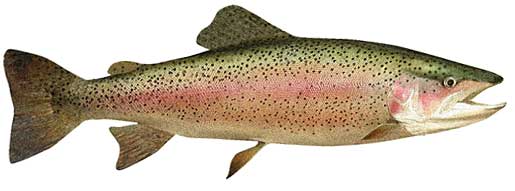
Rainbow trout are one of the most fished for trout species in the state, and can be found in numerous lakes and rivers throughout the state. Known for its tasty pink flesh, rainbows are a favorite among the vast majority of trout anglers in the area. It also appeals to the fly fisherman as it can be caught on flies as well as other small baits and lures. It feeds on small insects, minnows, crustaceans and worms. It is ideal for both sport and dining pleasure. Anglers can find rainbow trout in popular locations such as the Little Red River, White River, and Bull Shoals Lake. These waters provide ample opportunities for anglers to catch rainbow trout, with some individuals exceeding 10 pounds in weight. More...

Fishing For Cutthroat Trout
Cutthroat trout typically call the Pacific northwest home, however they are also stocked in many lakes. Cutthroat trout fishing holds a cherished place among anglers. While fly fishing reigns supreme as the preferred method, these prized fish are also susceptible to various artificial lures mimicking minnows or grubs, as well as live bait presentations. Cutthroat trout fishing is renowned for the spectacular battles while landing. Some remote streams and lakes in the Ouachita National Forest and the Ozark National Forest provide opportunities for anglers to catch cutthroat trout. More...

Fishing For Brook Trout
Brook trout, with their stunning colors and willingness to bite, can be found in remote mountain streams and creeks across the state. These feisty fish can provide an exciting fishing experience for those willing to explore more secluded and scenic locations. The primary food source of brookies is small insects, mollusks, crustaceans and other small fishes. In lakes where brook trout are stocked, shade over shallow cover is a great place to start. More...

Fishing For Brown Trout
Brown trout, another prized trout species, can be found in select area lakes and rivers. Many of these fisheries are attracting anglers from near and far. These elusive and wary fish offer a challenge to anglers, requiring stealthy presentations and precise casting to entice a bite. Brown trout feed on worms, minnows, insects and crustaceans. Larger browns can be taken on jerkbaits, small crankbaits and spinners. They can be found in select tailwaters and freestone rivers such as the White River and the Spring River. Brown trout tend to be more wary and selective in their feeding habits, requiring anglers to use a variety of techniques such as fly fishing or presenting natural-looking lures to entice these wary fish. More...

Fishing For Lake Trout
Lake trout are by far the largest of the trouts. They live in deep, cold lakes and feeds on virtually all forms of flesh which exist in its home waters. It's rich flaky flesh makes it a tasty table favorite. During early spring, lake trout can often be found in the shallows of lakes, readily taking dry flies, wet flies, and other slow-moving presentations. As surface temperatures rise, these trout typically migrate to deeper waters, prompting anglers to employ trolling with heavier tackle as the primary technique using spoons and baitfish-imitating lures. More...
Arkansas boasts impressive state records for trout, showcasing the potential for trophy-sized catches. The current state record for rainbow trout exceeds 19 pounds, caught in the White River. For brown trout, the state record stands at over 40 pounds, caught in the Little Red River. These records demonstrate the remarkable trout fishing opportunities that Arkansas's lakes and rivers offer to avid anglers.
Whether fishing in well-known trout destinations like the White River or exploring lesser-known streams and lakes, Arkansas's trout fishing scene provides a diverse range of experiences for anglers of all skill levels. From the thrill of battling a trophy rainbow trout to the serene beauty of casting a fly on a secluded river, Arkansas's trout fishing is a haven for those seeking both excitement and tranquility in their angling pursuits.
High-tech electronics and GPS precision improve catch rates for trout in lakes.
Fishing for trout in lakes with modern high-tech electronics, GPS, and advanced gear allows anglers to locate fish more efficiently and present lures with precision. High-definition sonar and down imaging help identify thermoclines, bait concentrations, and suspended fish over deep basins, while side imaging reveals points, drop-offs, and submerged structure along shorelines. GPS chartplotters with detailed contour maps make it easier to follow depth breaks and repeat productive trolling passes. Electric trolling motors provide quiet, controlled movement, reducing spooking in clear water. Lightweight graphite rods, sensitive tips, and low-stretch braided line with fluorocarbon leaders enhance bite detection at varying depths.
Trout Fishing Lakes
 Most people would never guess that world record trout are caught in Arkansas. Yet, the world record brown trout was caught in Little Red River. The previous world record it replaced also came from Arkansas. The White River and North Fork River also yield many nice trout including rainbow, brook, cutthroat and brown trout. For lakes, try Bull Shoals Lake or Greers Ferry Lake.
Trout Species In The State
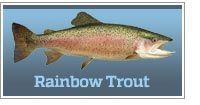
Rainbow trout
world record: 42 lbs 2 oz
state record: 19 lbs 1 oz
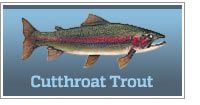
Cutthroat trout
world record: 41 lbs 0 oz
state record: 10 lbs 2 oz
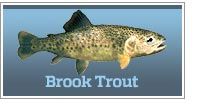
Brook trout
world record: 14 lbs 8 oz
state record: 5 lbs 0 oz
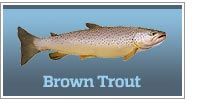
Brown trout
world record: 40 lbs 4 oz
state record: 40 lbs 4 oz
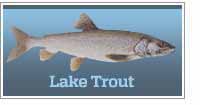
Lake trout
world record: 72 lbs 0 oz
state record: 11 lbs 5 oz
Click the images and links above for species details.
Select the best trout lures and baits
Trout spinners, crankbaits and jerkbaits work well for shallow, reasonably active fish. Salmon eggs, worms and prepared baits will work at virtually all depths.
Arkansas State Record Trout
The state record rainbow trout was caught from the White River.
The state record cutthroat trout was taken out of the White River.
The state record brook trout was taken out of the North Fork River.
The state record brown trout came from the Little Red River.
The state record lake trout was caught in Greers Ferry Lake.
Arkansas Trout Information
Visit the Arkansas Game & Fish Commission for details regarding trout stocking in Arkansas.
Additional trout information
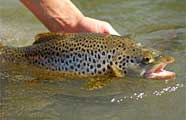 The 5 primary trout species are rainbow, brook, brown, cutthroat and lake trout. Browns are considered the most difficult to catch and brookies are the easiest. Pure cold water is key to survival of the trouts.
Watch trout fishing videos to see trout anglers in action.
Trout locations and info, by state


ARKANSAS