
Connecticut Trout Fishing


Guide to catching rainbow, brook, brown and lake trout in area lakes
Last updated on .
Best Trout Species, Lakes, Lures & Bait
Connecticut is renowned for its trout fishing opportunities, with a variety of trout species found in its lakes and rivers. Anglers can target four main trout species: rainbow trout, brown trout, lake trout and brook trout. The purpose of this page is to share basic information about trout fishing and identify trout fishing waters in the state.
Fishing For Rainbow Trout
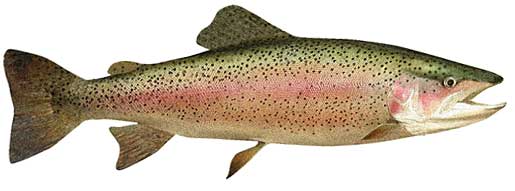
Rainbow trout are one of the most fished for trout species in the state, and can be found in numerous Connecticut lakes and rivers. Known for its tasty pink flesh, rainbows are a favorite among the vast majority of trout anglers in the state. It also appeals to the fly fisherman as it can be caught on flies as well as other small baits and lures. It feeds on small insects, minnows, crustaceans and worms. It is ideal for both sport and dining pleasure. Rainbow trout are widely stocked in Connecticut's lakes, ponds, and rivers, offering excellent fishing opportunities. These acrobatic fish are known for their vibrant colors and strong fights. Popular trout fishing locations include the Farmington River, Housatonic River, and various stocked lakes such as Mashapaug Pond and Mount Tom Pond. More...

Fishing For Brook Trout
Brook trout, with their stunning colors and willingness to bite, can be found in remote mountain streams and creeks across the state. These small but feisty fish can provide an exciting fishing experience for those willing to explore Connecticut's more secluded and scenic locations. The primary food source of brookies is small insects, mollusks, crustaceans and other small fishes. In lakes where brook trout are stocked, shade over shallow cover is a great place to start. Brook trout, Connecticut's only native trout species, inhabit several small streams and remote locations throughout the state. These beautiful fish with their vibrant colors and speckled patterns can be found in cool, pristine waters. More...

Fishing For Brown Trout
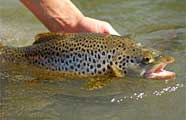
Brown trout, another prized trout species, can be found in select Connecticut lakes and rivers. Many of these fisheries are attracting anglers from near and far. These elusive and wary fish offer a challenge to anglers, requiring stealthy presentations and precise casting to entice a bite. Brown trout feed on worms, minnows, insects and crustaceans. Larger browns can be taken on jerkbaits, small crankbaits and spinners. Known for their elusive nature and challenging behavior, brown trout provide a rewarding fishing experience for dedicated anglers. The Farmington River, Naugatuck River, and West Branch Farmington River are popular destinations for targeting brown trout. More...

Fishing For Lake Trout
Lake trout are by far the largest of the trouts. They live in deep, cold lakes and feeds on virtually all forms of flesh which exist in its home waters. It's rich flaky flesh makes it a tasty table favorite. During early spring, lake trout can often be found in the shallows of lakes, readily taking dry flies, wet flies, and other slow-moving presentations. As surface temperatures rise, these trout typically migrate to deeper waters, prompting anglers to employ trolling with heavier tackle as the primary technique using spoons and baitfish-imitating lures. More...
Connecticut boasts a strong tradition of trout fishing and has a history of producing impressive catches. The state record for rainbow trout stands at over 14 pounds, while the brown trout record exceeds 18 pounds. These impressive catches highlight the potential for trophy-sized trout in Connecticut's waters.
When trout fishing in Connecticut, anglers can use a variety of techniques such as fly fishing, spin fishing, or bait fishing, depending on personal preference and fishing conditions. It's important to check and adhere to fishing regulations, including catch limits and size restrictions, to protect the trout populations and ensure sustainable fishing practices.
High-tech electronics and GPS precision improve catch rates for trout in lakes.
Fishing for trout in lakes with modern high-tech electronics, GPS, and advanced gear allows anglers to locate fish more efficiently and present lures with precision. High-definition sonar and down imaging help identify thermoclines, bait concentrations, and suspended fish over deep basins, while side imaging reveals points, drop-offs, and submerged structure along shorelines. GPS chartplotters with detailed contour maps make it easier to follow depth breaks and repeat productive trolling passes. Electric trolling motors provide quiet, controlled movement, reducing spooking in clear water. Lightweight graphite rods, sensitive tips, and low-stretch braided line with fluorocarbon leaders enhance bite detection at varying depths.
Connecticut Trout Fishing Lakes
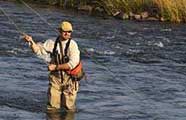 The cold waters in Connecticut make a haven for trout. You can find populations of trout in most rivers and streams plus major lakes like Alexander Lake, Amos Lake, Bantam Lake, Bashan Lake, Beach Pond, Black Pond, Candlewood Lake, Cedar Lake, Colebrook River Lake, Crystal Lake, Gardner Lake, Green Falls Pond, Highland Lake, Lake McDonough, Lake Quassapaug, Lake Saltonstall, Lake Zoar, Mashapaug Lake, Pinewood Lake, Quinebaug Pond, Rogers Lake, Saugatuck Reservoir, Squantz Pond, Tyler Lake, Washining Lake, West Hill Pond, West Thompson Lake and Wononscopomuc Lake. Numerous lakes in the state offer ice fishing in winter.
Trout Species In The State
Rainbow trout
world record: 42 lbs 2 oz
state record: 14 lbs 10 oz
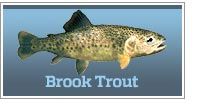
Brook trout
world record: 14 lbs 8 oz
state record: 9 lbs 3 oz
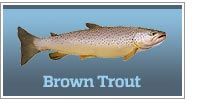
Brown trout
world record: 40 lbs 4 oz
state record: 19 lbs 0 oz
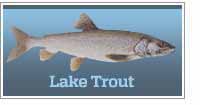
Lake trout
world record: 72 lbs 0 oz
state record: 29 lbs 13 oz
Click the images and links above for species details.
Select the best trout lures and baits
Trout spinners, crankbaits and jerkbaits work well for shallow, reasonably active fish. Salmon eggs, worms and prepared baits will work at virtually all depths.
State Trout Records
The state record rainbow trout was caught from Mansfield Hollow Lake.
The state record brook trout was taken out of Blackwells Brook.
The state record brown trout came from West Hill Pond.
The state record lake trout was caught in Wononscopomuc Lake.
The state record tiger trout was taken out of Quassapaug Lake.
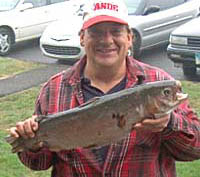 Robert Pochesci with his opening day brown trout - 7lbs 7 oz, and 25 1/2 inches long.
Connecticut Trout Information
Visit the Connecticut Department of Environmental Protection website for information regarding trout distribution and stocking in Connecticut.
Additional trout information
 The 5 primary trout species are rainbow, brook, brown, cutthroat and lake trout. Browns are considered the most difficult to catch and brookies are the easiest. Pure cold water is key to survival of the trouts.
Watch trout fishing videos to see trout anglers in action.
Trout locations and info, by state


CONNECTICUT